
Annual review season looks neat on a corporate calendar — and falls apart when managers are covering a double on a Saturday night. Performance review software helps organizations collect feedback, track goals, and document development conversations without living in spreadsheets. For shift-based teams in hospitality, retail, and healthcare, the useful version is mobile check-ins, probation milestones, and cert-linked coaching — not a desk-only annual form that nobody finishes.
This 2026 guide to the best performance review software for shift teams compares eight tools (plus an enterprise callout) with pricing, screenshots, and selection criteria you can act on. We focus on review cycles and continuous feedback — not the full hire-to-retain stack. If hiring and retention are still broken, start with our talent management software guide; if the gap is pulses and recognition, see employee engagement software.
What is performance review software?
Performance review software — also called performance appraisal software or employee performance review software — digitises how managers and employees evaluate work, set goals, and capture feedback. Typical modules include review templates, self-assessments, optional 360 feedback, goal tracking, automated reminders, and reporting so HR can see who finished — instead of chasing Word docs in email.
On shift floors, teams use it for probation check-ins, quarterly floor conversations, skills and cert milestones, and short development notes that survive peak season. That is different from a full HR software suite (payroll, scheduling, records) or a pure engagement survey tool. A practical frontline stack usually includes:
- Templates and cycles — probation, 30/60/90 days, quarterly, or continuous check-ins
- Multi-rater input — manager, self, and optional peer or 360 feedback
- Goals and competencies — role standards tied to floor behaviors, not only OKRs for desk teams
- Records and audit trail — signed outcomes stored with the employee profile in employee files
If your managers live on their phones mid-shift, prioritize mobile completion and short forms over enterprise calibration grids. Daily rotas and clock-ins still belong in workforce management software — reviews should pull from real attendance and role history, not try to replace operations systems.
Performance review software at a glance (2026)
What is the best performance review software? There is no universal winner — the right pick depends on desk vs hourly mix. An office SMB may shortlist Lattice or PerformYard; a 40-site restaurant group usually needs mobile check-ins plus reliable employee records. Use the table to cut to two options, then pilot on one busy site.
| Software | Best for | Starting price | Shift-team fit | Free trial |
|---|---|---|---|---|
| Ordio | EU shift teams tying reviews to files + ops | from approx. €89/location/mo | Strong (partial) | 7-day trial |
| Connecteam | Frontline mobile check-ins + HR hub | Free ≤10 users; paid from approx. $29/mo | Strong | Free tier |
| TalentReef | Hourly hiring with light development | Custom quote | Moderate–strong | Demo-led |
| BambooHR | SMB HRIS + performance module | from approx. $10–$12/employee/mo | Moderate | Demo-led |
| Lattice | Office performance + engagement | from approx. $11/user/mo | Light (office-led) | Demo-led |
| PerformYard | Structured review cycles | from approx. $5/user/mo | Moderate | Demo-led |
| 15Five | Weekly check-ins + continuous feedback | from approx. $4–$7/user/mo | Light–moderate | Demo-led |
| Leapsome | EU/GDPR-friendly reviews + goals | from approx. $8/user/mo | Moderate | Demo-led |
| Workday / SAP | Enterprise 500+ employees | Custom | Enterprise | Demo-led |
Prices approximate — as of July 2026. Confirm on vendor sites before purchase. Seat-based plans add up quickly for high-turnover hourly headcount; model per-location vs per-user maths before you scale past site two.
Note: Enterprise performance suites (Workday, SAP SuccessFactors) target global calibration and succession. For 10–200 shift workers per site, the SMB and frontline tools above are usually faster to adopt — and more likely to get completed.
How we evaluated these tools
We scored each platform on criteria that matter when managers run reviews between service peaks:
- Mobile / shift-lead usability — can a supervisor finish a check-in on a phone in under ten minutes?
- Continuous vs annual flexibility — probation, quarterly, and lightweight cadences without a six-week setup
- Cert and probation hooks — link reviews to skills, safety certs, and 30/60/90 milestones
- Integrations — HRIS, Slack/Teams, and paths to time tracking or payroll IDs
- Useful analytics — completion by site and overdue probation views managers will actually open
- Pricing transparency — clear per-seat vs per-location maths for multi-site groups
We excluded pure enterprise succession suites from the detailed shortlist unless noted as an enterprise callout. Many US comparison pages on performance review software rank office-first tools — this guide prioritises operators who live on shift floors.
When you evaluate vendors, ask for a live demo of a floor supervisor finishing a probation review mid-shift — not only an HR admin configuring a yearly cycle. If the form cannot be shortened for hourly roles, completion will drop in peak weeks.
Also score how reminders reach managers. Email-only nudges miss supervisors who live in WhatsApp or Teams. Tools that notify inside apps people already open beat feature-rich portals nobody returns to after onboarding.
The 8 best performance review software options for shift teams
Below are concise profiles with July 2026 homepage screenshots, strengths, limitations, and who should shortlist each tool. We ranked for shift-team reality — mobile completion, probation milestones, and manager time during service — not for the longest goal library in a demo.
Skim “best for / who it’s for,” then use the comparison table to cut to three. If hiring is still the bottleneck, fix that with TalentReef or your ATS before polishing review templates. If the floor runs fine but reviews live in email, start with Ordio, Connecteam, or PerformYard.
Ordio
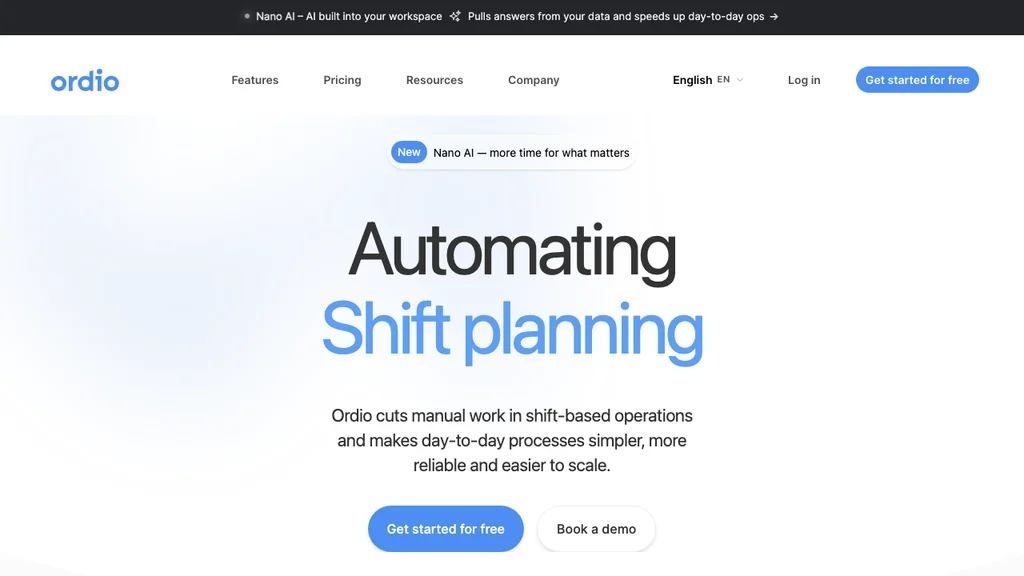
Best for: Multi-location hospitality, retail, and healthcare groups that need employee files, document management, and shift operations together — with light performance check-ins tied to real floor context.
Who it's for: Operators replacing folder-based reviews or split HR/scheduling stacks; HR leads who need compliant records without a six-month HCM implementation.
Ordio covers digital employee records, onboarding workflows, shift planning, time tracking, and absence management — so site managers are not chasing review PDFs in email while rebuilding next week's rota.
Pros: Strong EU labor-compliance narrative, location-based pricing, industry workflows for shift sites. Cons: Not a full performance suite — no native 9-box succession, deep OKR engines, or Lattice-class engagement surveys.
Verdict: A strong pick when shift operations and compliant employee records matter more than headquarters calibration modelling — pair with a specialist review tool only if you need continuous OKR culture for desk teams.
Try employee records and shift operations in one place:
Connecteam
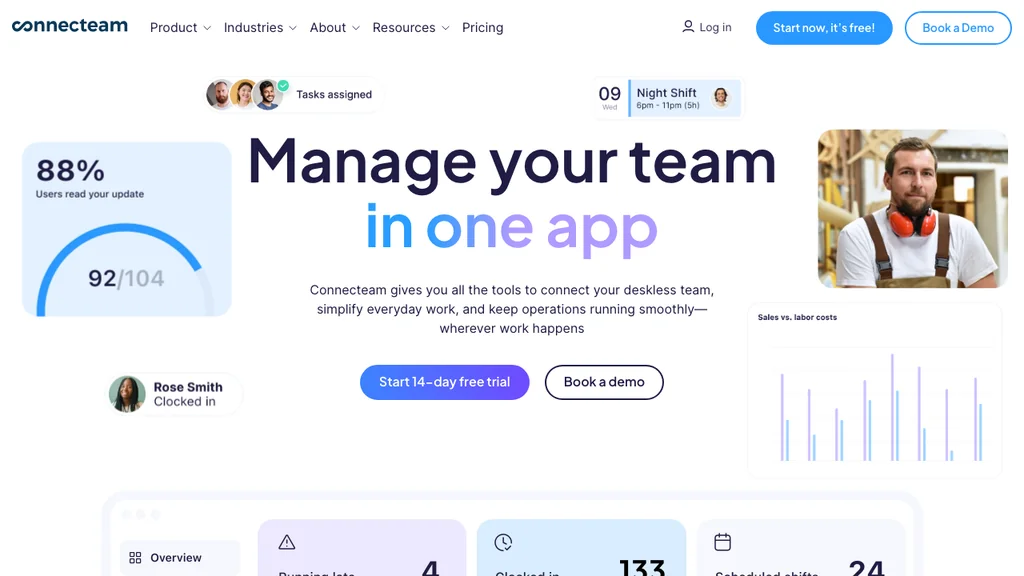
Best for: Deskless teams wanting mobile checklists, forms, chat, and lightweight performance tasks beside daily operations.
Who it's for: Field supervisors and ops leads who already coordinate via mobile and want review tasks in the same hub.
Pros: Generous free tier for small teams; strong frontline UX. Cons: Hub pricing grows with modules; lighter on deep multi-rater enterprise reviews.
Verdict: Connecteam fits when mobile completion beats a pure performance specialist — validate how review history exports into your HRIS for audits.
Teams that already run chat, task lists, and training in Connecteam often adopt review forms quickly because the habit already exists on the phone. If your buyer question is strictly compliance-grade performance documentation across EU jurisdictions, confirm retention periods and export formats early — hub tools can be lighter on long-term HR archives than dedicated HRIS platforms.
TalentReef
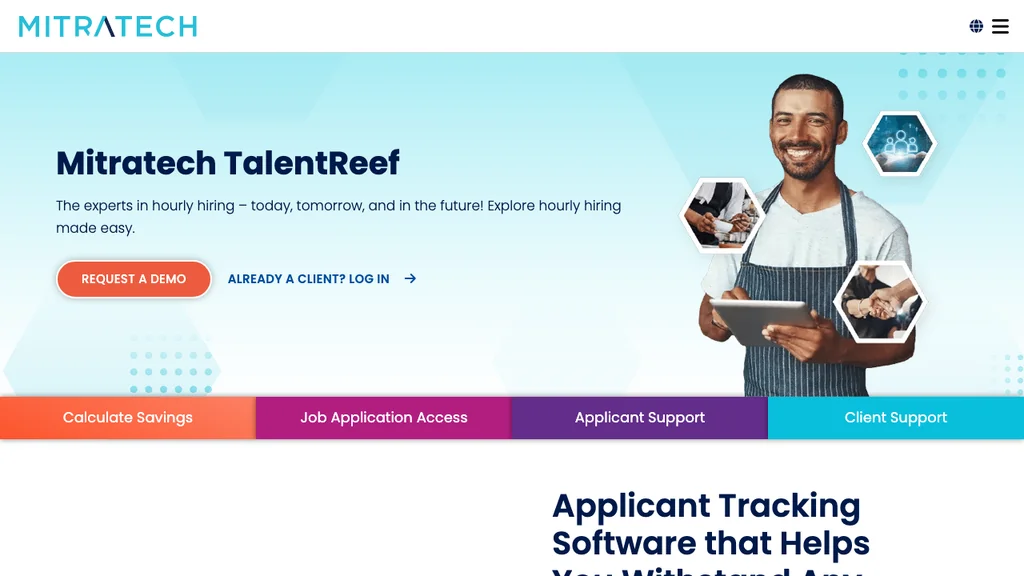
Best for: High-volume hourly hiring networks that also need light post-hire development for restaurant, retail, and franchise roles.
Who it's for: Talent acquisition and ops leads where time-to-hire is the primary bottleneck — performance maturity comes second.
Pros: Purpose-built hourly ecosystem; strong hiring funnel. Cons: Not a dedicated continuous-feedback suite like Lattice or 15Five; pricing is quote-based.
Verdict: Shortlist TalentReef when hiring velocity and early-tenure development matter more than polished goal frameworks — pair with a review specialist if you need deeper cycles later.
Franchise and QSR networks often start here because the applicant journey is mobile-first. Treat TalentReef as the early-tenure layer: hire fast, capture day-one readiness, then decide whether a dedicated review cycle tool is still needed once managers can actually complete probation forms on the floor.
BambooHR
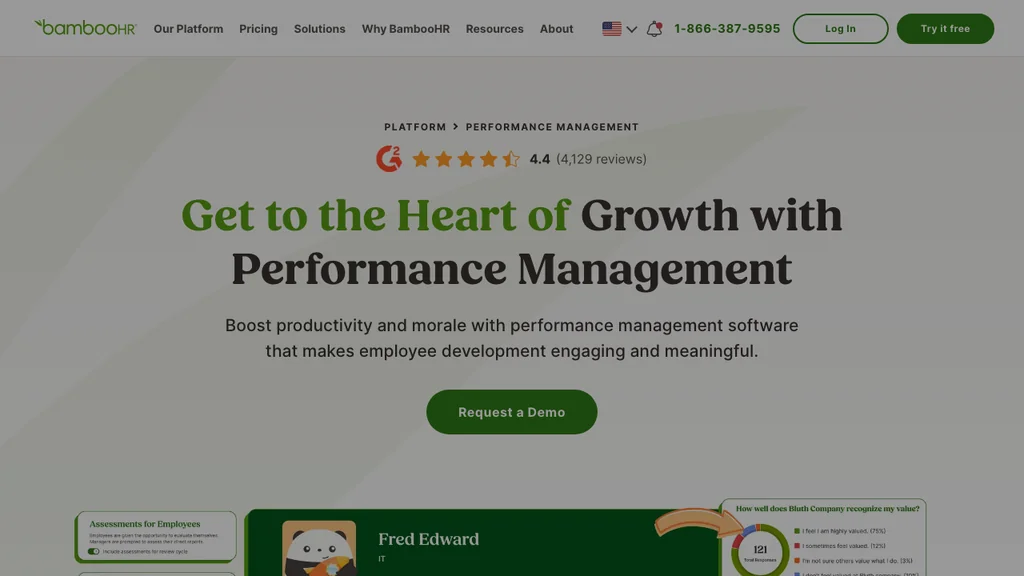
Best for: SMB teams with a mix of desk and frontline staff who want HRIS records, onboarding, and performance in one familiar US-market platform.
Who it's for: HR generalists at companies under ~200 employees — especially when hourly staff are a minority of headcount.
Pros: Mature integrations, approachable UI, solid review basics. Cons: Shift-floor workflows are not as specialised as Connecteam; EU compliance depth varies by module.
Verdict: BambooHR is the pragmatic pick for small and mid-size teams that want HRIS records and reviews in one familiar platform — without an enterprise implementation.
Choose it when HR already lives there and you need consistent templates more than a purpose-built hourly ops stack. Pilot one district that mixes desk and floor roles; if shift leads bounce off long forms, shorten templates before buying engagement add-ons. Confirm what sits in the base plan versus paid modules — packaging changes often (pricing noted as of July 2026).
Lattice
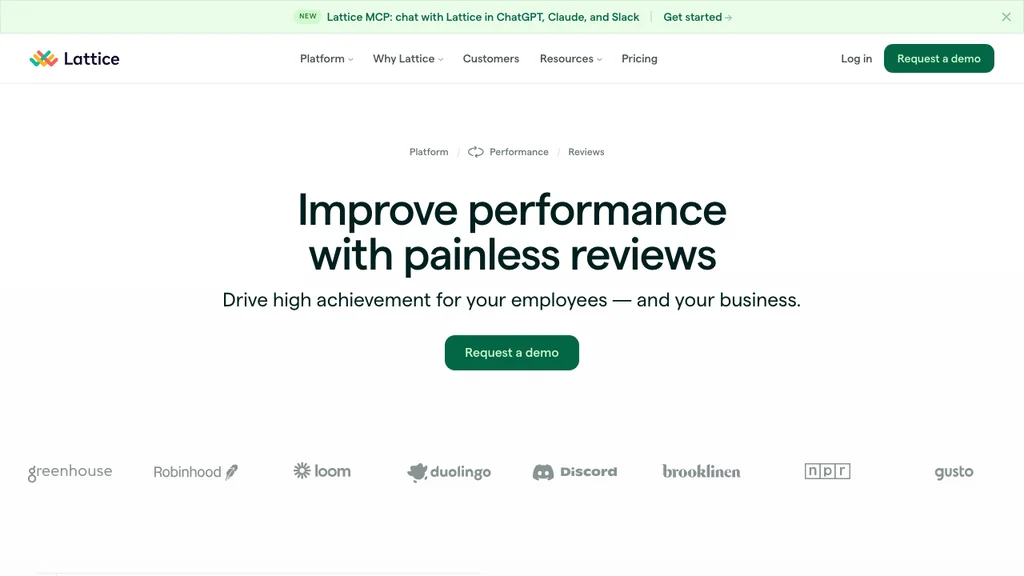
Best for: Culture-forward companies prioritising continuous feedback, goals, and engagement surveys for knowledge workers and managers.
Who it's for: People ops teams building manager feedback habits at tech, professional services, or hybrid companies.
Pros: Strong performance and engagement UX; popular mid-market benchmark. Cons: Limited native hourly hiring stack; busy floor managers may not sustain weekly check-in cadences without simplification.
Verdict: Lattice shines for office-led performance programmes. It is a weaker sole system when you hire hundreds of hourly staff a quarter — simplify cadences for shift supervisors or forms will stall.
Many people teams expect Lattice on a mid-market shortlist. Keep it when HQ owns continuous feedback and engagement surveys; pair it with a frontline ops layer if you also need scheduling, time, and employee files. Ask for a mobile walkthrough with a real shift-lead persona before you assume weekly check-ins will stick.
PerformYard
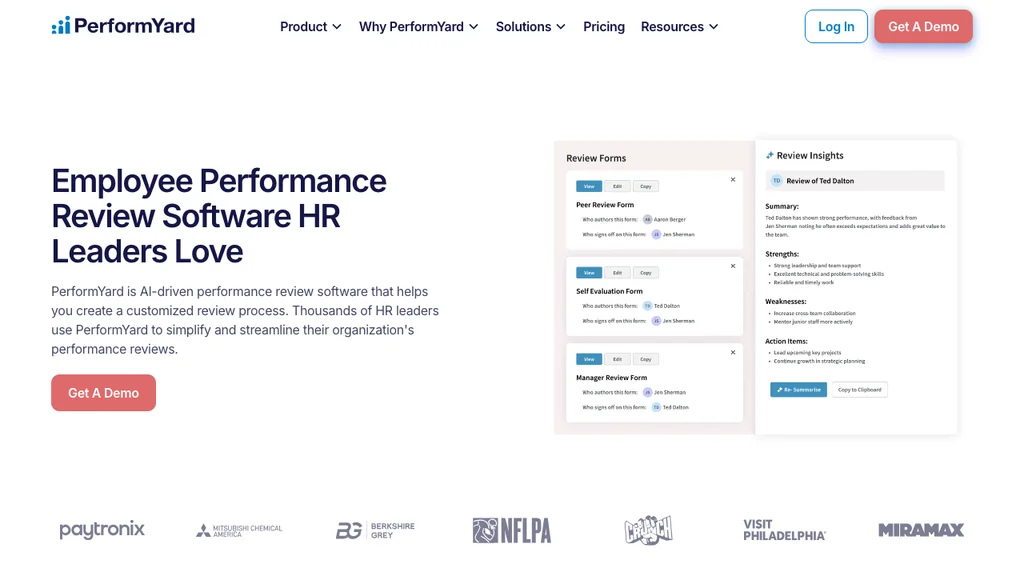
Best for: Mid-market organizations that want structured review cycles, custom forms, and HRIS integrations without enterprise HCM cost.
Who it's for: HR teams that already have hiring covered but need consistent templates across districts or brands.
Pros: Clear review workflows; flexible form design. Cons: Hiring and onboarding are not core — pair with an ATS or hourly hiring tool.
Verdict: PerformYard works when performance maturity and documentation are the gap — not applicant volume. Strong candidate when you need structured annual performance review cycles that can also support continuous check-ins.
Shortlist PerformYard when you need custom forms, reminder workflows, and clean exports for audits across multiple brands or regions. It will not replace an hourly ATS. Validate HRIS sync fields for job titles and locations so managers do not retype org data every cycle, and measure median form completion time on a peak-season week.
15Five
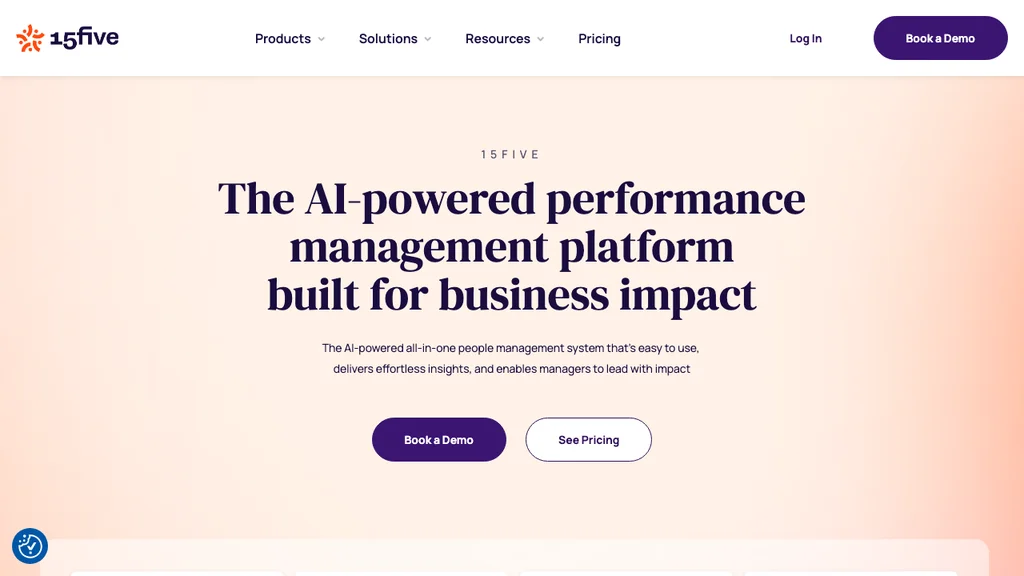
Best for: Teams that want weekly or bi-weekly check-ins, recognition, and lightweight continuous feedback instead of one heavy annual event.
Who it's for: People ops leaders building manager habits in hybrid or office-led organizations; less often the sole tool for high-volume hourly crews.
Pros: Strong continuous cadence; approachable manager UX. Cons: Weekly rituals can fail on busy floors unless forms are shortened; pricing is seat-based.
Verdict: Shortlist 15Five when your problem is feedback culture — then adapt cadence for shift supervisors (monthly or post-peak check-ins).
Office teams often love the weekly rhythm; shift teams usually need a lighter template and a longer interval. If you pilot 15Five with frontline managers, start with a five-question monthly form and only increase frequency once most reviews actually finish for two cycles in a row.
Leapsome
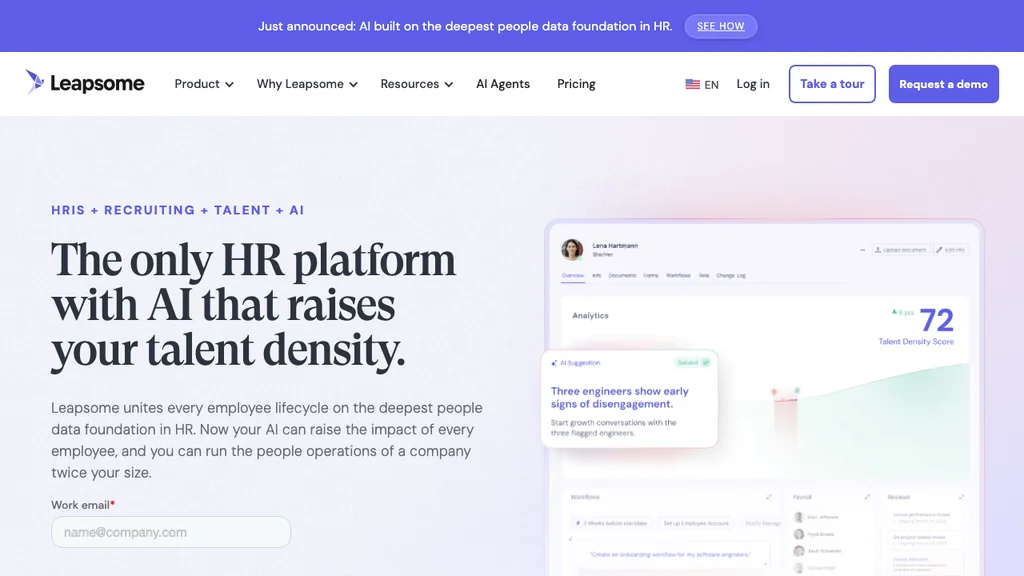
Best for: European and internationally distributed teams that want GDPR-aware performance, goals, and learning modules in one platform.
Who it's for: Mid-market people teams spanning DACH/UK/US with desk-heavy populations and growing floor teams.
Pros: Strong EU positioning; reviews + goals + learning. Cons: Not specialised for high-volume hourly hiring; implementation weight closer to mid-market HCM than a single-site café tool.
Verdict: Leapsome belongs on UK/EU shortlists when compliance narrative and continuous performance matter — validate mobile completion for shift leads.
Leapsome is a credible bridge for internationally distributed teams that want goals, reviews, and learning without jumping straight to Workday-class HCM. For hospitality or retail groups with UK/EU sites, pressure-test GDPR retention settings and whether floor managers can finish short reviews on a phone between services. If learning modules are unused, negotiate for the performance tier you will actually run.
Workday and SAP SuccessFactors (enterprise callout)
Enterprise performance suites such as Workday and SAP SuccessFactors own complex calibration, global compensation, and succession planning. They are rarely the fastest path for a 40-site hospitality group that needs mobile check-ins next month.
If you are already on Workday or SAP for core HR, use their performance modules and add a frontline ops layer for scheduling and files — do not rip out an enterprise stack for a lighter specialist tool. Shortlist them when multi-country compensation committees and board-level talent reviews are non-negotiable; otherwise treat them as a later-stage upgrade once review habits exist on the floor.
Performance review software vs talent management vs employee engagement vs HRIS
Buyers often mix four nearby categories. Name the outcome you need this quarter so your RFP does not quietly become three products at once:
- Performance review software — cycles, feedback, goals, and documentation of development conversations (this guide).
- Talent management software — hire-to-retain lifecycle (ATS, onboarding, development, retention).
- Employee engagement software — pulses, eNPS, recognition, and culture surveys.
- HR software / HRIS — employee records, payroll hooks, and broad HR administration.
When each category should lead: Choose a review specialist when incomplete appraisals and missing signed records are the pain. Choose talent management when hiring volume and onboarding docs are broken. Choose engagement when you need pulse signal and recognition, not formal appraisals. Choose HRIS when employee master data and admin workflows are still in spreadsheets.
Lattice and BambooHR appear in more than one category for a reason — modules overlap. Shortlist by outcome: finished reviews, faster hiring, better survey scores, or cleaner employee files. Do not merge three buying questions into one RFP and then wonder why implementation stalls.
For shift operators, a common durable stack is ops + files (Ordio or Connecteam) for the floor, plus a lighter review module if HQ insists on formal cycles. Revisit the mix after two review periods — buying a full talent suite “just in case” is how seat costs explode without improving Saturday-night completion.
Continuous vs annual performance reviews
Annual reviews concentrate judgment into one high-stakes conversation. They create recency bias, heavy admin spikes, and forms that sit unfinished when the floor is understaffed. Continuous performance management spreads feedback across the year — shorter check-ins, monthly 1:1s, or quarterly conversations — so managers correct course before peak season, not after.
On shift floors, “continuous” rarely means a weekly written essay. Practical patterns include:
- Probation 30/60/90 — short templates tied to role readiness
- Post-cert coaching — food safety, care credentials, or equipment training follow-ups
- Quarterly floor check-ins — five questions max, mobile-first
- Incident-triggered notes — documented coaching after guest or safety events
Pick software that supports those cadences without forcing an office OKR ritual onto every barista and care aide. A hybrid model works for many multi-site groups: continuous notes for hourly crew, plus one structured mid-year or year-end conversation for supervisors and salaried staff.
Whatever cadence you choose, prove two things in a pilot: managers can finish forms on a phone, and HR can retrieve a signed history later. If either fails, continuous vs annual is an academic debate. Choose continuous when manager habits already exist; choose structured annual cycles when you need a clean audit trail once or twice a year — and layer short probation forms either way.
Types of performance appraisal software
Performance appraisal software sits in the same product family as performance review software. Vendors use both labels for annual forms, continuous check-ins, or hybrid cycles. For shift teams, the useful taxonomy is cadence and who fills the form — not the marketing name on the homepage.
- Annual / cycle-based appraisal tools — structured forms, ratings, and sign-off windows (common in PerformYard and BambooHR-style HRIS modules).
- Continuous performance platforms — goals, 1:1s, and frequent feedback (Lattice, 15Five, Leapsome).
- Frontline / hourly ops stacks with review docs — mobile check-ins tied to roles, certs, and schedules (Ordio, Connecteam, TalentReef-adjacent workflows).
- 360° / multi-rater add-ons — peer and skip-level input; useful for supervisors, usually too heavy for every hourly role.
- Enterprise HCM performance modules — Workday and SAP SuccessFactors when global calibration is mandatory.
Most mid-size operators mix two types: a lightweight floor check-in plus a lighter annual summary for compensation or compliance. Pick the primary type that matches who actually opens the app on a Saturday night.
When vendors say “performance management software,” they often mean continuous platforms plus goals. This guide still focuses on performance review software — the forms, reminders, and documentation that make appraisals finish — and points you to talent or engagement guides when the buying question is broader.
How performance review software works
In practice, employee performance review software runs a short loop: HR sets a template, the system assigns reviewers, managers and employees fill forms on web or mobile, reminders chase incomplete items, and signed results land in the employee record.
- Configure — choose questions, rating scales, and who participates (self, manager, optional peers).
- Assign — map employees by location, role, or probation end date — critical for high-turnover hourly teams.
- Collect — push mobile-friendly forms; keep length under what a shift lead can finish mid-service.
- Discuss — use the form as a conversation guide, not a substitute for a five-minute floor talk.
- Store and act — save the signed output in employee files, then trigger training, schedule changes, or probation decisions.
Tools differ mainly in step two and three: whether assignment respects shift locations, and whether collection works offline or on a phone. If those fail, the rest of the workflow never starts.
Analytics come last: completion by site, overdue probation reviews, and average time-to-complete. Dashboards that ignore location and role usually hide the floor managers who need help most.
Benefits of performance review software for shift teams
Software alone does not create a performance culture — but the right tool removes the spreadsheet failure modes that kill reviews after week one.
- More reviews finished — reminders and mobile forms beat emailed Word docs that vanish mid-service.
- Fairer documentation — the same template across sites reduces “manager favorite” free-text chaos.
- Faster probation decisions — milestones fire before the legal window closes, not after.
- Audit-ready history — signed reviews sit beside contracts and certs when disputes arise.
- Clearer coaching hooks — short check-ins surface cert gaps and role readiness before peak season.
Measure finished reviews on a busy site first — not how many goal fields appear in a vendor demo. If most forms still stall after two cycles, fix the template or change tools before you roll out company-wide.
Secondary gains show up in ops metrics: fewer missed probation endings, fewer “we never documented that” disputes, and cleaner handovers when a shift lead leaves. That is why frontline teams should not copy an office goal playbook without editing it for floor time.
Key features for hourly and shift-based teams
When you compare employee performance review software for deskless workforces, prioritize:
- Mobile-first completion — supervisors can finish forms mid-shift
- Short, role-based templates — different forms for hosts, cooks, nurses, and store leads
- Probation and cert milestones — reminders linked to tenure and credentials
- Manager load realism — skip weekly rituals that conflict with peak trading
- Audit-friendly storage — outcomes land in employee files, not personal email
- Integrations — HRIS IDs, Slack/Teams nudges, exports to payroll or learning tools
Pressure-test the product with real vertical paths: hospitality on a Saturday peak with service-standard language; retail with a district manager reviewing several stores in one afternoon; healthcare and care with clinical competencies and mandatory training beside performance notes — expired certs belong in employee files, not only in a comment field.
Also ask whether the tool supports different rating scales by role family. A five-level corporate scale that works for desk managers can confuse hourly crews. Many operators switch to behavior checklists (“meets service standard / needs coaching”) for floor roles while keeping numeric scales for salaried supervisors. Software that cannot fork templates by role forces one awkward form onto everyone.
Performance review software pricing (what teams actually pay)
How much does performance review software cost? As of July 2026, SMB seat-based plans commonly land between about $4 and $12 per user per month, depending on modules (reviews only vs goals + engagement). A 50-person team at $8/user is roughly $400/month before implementation. Location-based stacks (like Ordio) can cost less for high-turnover hourly headcount because you are not paying a full seat for every seasonal hire.
Illustrative maths for a 120-person hospitality group with 30 seasonal peak hires: a $10/user plan can bill ~$1,500/month if every seasonal worker gets a seat — even if they only need two probation reviews. Per-location pricing often looks higher on paper but wins when turnover is structural.
Budget for:
- Implementation and template design — often underestimated
- Module creep — engagement and learning add-ons
- Inactive seats — leavers who still bill until cleaned up
- Admin time — chasing incomplete reviews costs more than the license
Ask vendors for a quote on your peak seasonal headcount, not your quietest month. Request a written list of what is included in the base tier — “performance” marketing often hides paid goal, engagement, or analytics modules behind the list price.
How to choose performance review software for shift teams
- Define the outcome — probation completion, quarterly floor check-ins, or documentation for disputes — not “buy whatever won last year’s people-ops bake-off.”
- Map who fills the form — shift leads vs HR generalists; design for the real primary user.
- Shortlist three tools — one frontline-mobile, one SMB HRIS + reviews, one specialist continuous tool.
- Pilot for two cycles — one busy site; track finished reviews and median time-to-complete.
- Check integrations and data exit — you must export review history if you switch vendors.
Involve floor staff in the pilot. Software that only impresses in a head-office demo will fail on a peak Friday. Write a one-page brief before demos: roles in scope, form length, reminder channel, success bar (most reviews finished, median form time under ten minutes, no missing signed probation records), and who owns overdue items.
Before you sign, decide the system of record: where the signed PDF or digital acknowledgement lives, who can edit historical ratings, and how leavers’ reviews are retained. Those governance answers matter more than another AI writing assistant in the proposal.
Common mistakes when buying performance review software
Most failed rollouts share the same pattern: the tool was chosen for a demo audience that never fills the form on the floor.
- Buying for HQ taste only — continuous OKR suites look great in a people-ops workshop and stall with shift leads.
- Forms that are too long — if a review takes twenty minutes, it will not finish mid-service.
- Ignoring assignment by location — global “everyone due Friday” waves break multi-site schedules.
- No system of record — PDFs in email are not an audit trail; signed reviews need a home in employee files.
- Skipping the busy-site pilot — quiet Monday demos hide Friday-night failure modes.
Fix the process and template length before you blame the vendor. Software amplifies the cadence you already run — it will not invent manager time you do not have.
First 30 days: implementation checklist
After you pick a tool, the first month should prove completion — not configure every module.
- Week 1 — import one site’s employees; map roles and probation end dates; pick a 5–8 question template.
- Week 2 — train shift leads on mobile completion; set reminders; designate who owns overdue items.
- Week 3 — run the first cycle on that site only; measure completion rate and median time-to-complete.
- Week 4 — export a sample signed review; confirm it lands in the employee record; cut unused questions.
Only then expand to a second site. If week three still leaves a large share of reviews unfinished, shorten the form or change the reminder channel before you scale licences.
Where Ordio fits (honest guide)
Ordio fits well when:
- You run multi-location shift operations and need employee records, scheduling, and time in one stack
- Performance conversations should sit beside certs, contracts, and role history — not in a separate spreadsheet
- You want location-based pricing that does not punish high-turnover hourly headcount
Ordio is not the best fit when:
- You need enterprise 9-box succession, compensation calibration, or deep OKR programmes
- Your only gap is office-led continuous feedback for knowledge workers (Lattice, 15Five, Leapsome)
- You want a pure review specialist with no ops footprint
Be direct in the RFP: Ordio is a partial fit for buyers comparing desk-first performance suites. It wins when review documentation must live next to real shift operations — and when location-based pricing matters more than per-seat goal dashboards.
Many operators run a hybrid intentionally: Ordio for files, scheduling, and time; a specialist review tool for HQ-driven cycles. That is fine — budget the admin of keeping employee IDs aligned, and decide which system owns signed reviews.
If you score Ordio only on continuous-feedback depth next to Lattice or 15Five, it will look incomplete. Score it on frontline documentation and ops adjacency instead — that is the use case this guide is written for.
Related guides for shift-based teams
If reviews are only one part of the people stack, these sibling guides each answer a different buying question:
- 360-degree feedback tools — multi-rater / peer cycles when manager reviews alone leave blind spots
- Talent management software — hire-to-retain workflows beyond the review cycle
- Competency management software — role readiness, certificates, and evidence of who can work which station
- Employee engagement software — pulses, recognition, and culture surveys
- HR software — broader HRIS umbrella and admin
- Workforce management software — rotas, labor cost, and compliance reporting
Product pages that often sit beside a review rollout: employee files, shift planning, time tracking, absence management, and Ordio pricing. For industry context, see hospitality, retail, and healthcare.
Conclusion: pick the right performance review software for your team
The best performance review software is the one managers finish — not the one with the longest feature list. Shortlist for shift-team fit, pilot on a busy site, and keep reviews tied to real roles, certs, and employee records.
If you need operations and files together, start a trial of Ordio. If you need office continuous feedback, compare Lattice, PerformYard, 15Five, or Leapsome on the same criteria. If hiring is still broken, fix that first with TalentReef or your ATS — review tools will not fill an empty bench.
Revisit pricing and finished-review metrics after 90 days. Keep the tool your shift leads still open when the floor is full — and that HR can defend in an audit without hunting email attachments.