Guides
Best Workforce Management Software 2026

Last-minute call-outs, spreadsheet rotas, and separate apps for scheduling and clock-ins drain manager time in hospitality, retail, and healthcare. Workforce management software (WFM) brings shift planning, time tracking, absence, and labour reporting into one system, so planned rotas match hours actually worked.
This 2026 comparison of the best workforce management software covers eight tools for shift-based teams: pricing, screenshots, selection criteria, and an honest fit guide, not another generic HR top-10 list built for contact centres or enterprise HCM. You also get vertical notes for restaurants, stores, and care teams. For Ordio product depth, see shift planning and time tracking.
What is workforce management software?
Workforce management software is a digital system that plans shifts, tracks worked time, manages absences, and supports labour compliance for deskless teams. Managers see who is working, when, and at what cost, without reconciling spreadsheets against a separate clock-in app.
What is workforce management software used for? Day to day, it coordinates scheduling, time and attendance, absence, and labour reporting in one workflow. WFM is built for teams where plans change daily, not for desk-only HR suites or contact-centre forecasting on its own. When leave and PTO are the primary purchase (not full WFM), start with our absence management software comparison.
Strong WFM connects the rota to actual hours, flags break and rest issues, and exports clean data for payroll. That is different from a standalone scheduling app (calendar only) or a full HRIS focused on hiring and employee records.
A typical shift WFM stack includes:
- Scheduling, publish and update rotas by site or team
- Time and attendance, mobile clock-in/out and break capture
- Absence, leave, sickness, and cover requests
- Labour reporting, hours and costs for payroll and compliance
If you run hospitality, retail, or healthcare shifts, you typically need planning plus time capture, ideally in one platform. Document storage for contracts and certifications often sits in a separate employee file module, but daily shift operations should still live in WFM.
Workforce management software at a glance (2026)
What is the best workforce management software? There is no universal winner, the right tool depends on team size, region, and whether you need EU labour-law depth, US payroll hooks, or a simple mobile rota. The table below compares eight options for shift-based SMBs; prices are starting points, confirm on the vendor site.
| Software | Best for | Starting price | Free trial | EU / DACH fit |
|---|---|---|---|---|
| Ordio | DACH/EU shift ops expanding to UK/IE | from approx. €89/location/mo | 7-day trial | Strong |
| Deputy | Compliance automation (US/UK/AU) | from approx. $5/user/mo | 31 days | Moderate |
| Connecteam | Mobile deskless operations hub | Free ≤10 users; paid from approx. $29/mo | Free tier | Moderate |
| Planday | EU hospitality labour costing | from approx. €2.99/user/mo | 30 days | Strong (EU) |
| When I Work | Simple US/UK SMB scheduling | from approx. $2.50/user/mo | 14 days | Light |
| Shiftbase | EU hourly teams | from approx. €30/mo (6 users) | 14 days | Strong (EU) |
| Homebase | US hourly free tier | Free basic; paid from approx. $24/location/mo | Free tier | US-focused |
| UKG / Workday | Enterprise 500+ employees | Custom | Demo-led | Enterprise |
Prices approximate, as of July 2026. Source vendor pricing pages; verify before purchase.
Note: Enterprise WFM (UKG, Workday, Verint) targets complex HCM and contact-centre forecasting. For 10–200 shift workers, the SMB tools above are usually the faster, more affordable fit.
How we evaluated these tools
We scored each tool on criteria that show up in real shift operations, not marketing feature counts:
- Integrated scheduling and time, one source for planned vs actual hours
- Absence and availability, leave, sickness, and shift swaps without spreadsheets
- Compliance support, breaks, rest periods, and audit-friendly records (US FLSA / UK Working Time / EU rules)
- Mobile experience, frontline staff can view rotas and clock in/out
- Multi-site control, central planning with local execution
- Payroll path, exports or integrations that reduce re-keying
- Rollout speed, live in weeks, not a six-month integration programme
We excluded pure contact-centre WFM and CFO headcount-planning suites. Many US listicles on workforce management software rank tools built for call-volume forecasting, not for restaurant, store, or clinic floors. Our shortlist focuses on shift scheduling software that handles real call-outs, mobile clock-ins crews actually use, and hour exports payroll can trust: Deputy, Connecteam, Planday, and EU-friendly options alongside Ordio.
The 8 best workforce management software options
Below are concise profiles with July 2026 homepage screenshots, strengths, limitations, and who should shortlist each tool.
Ordio
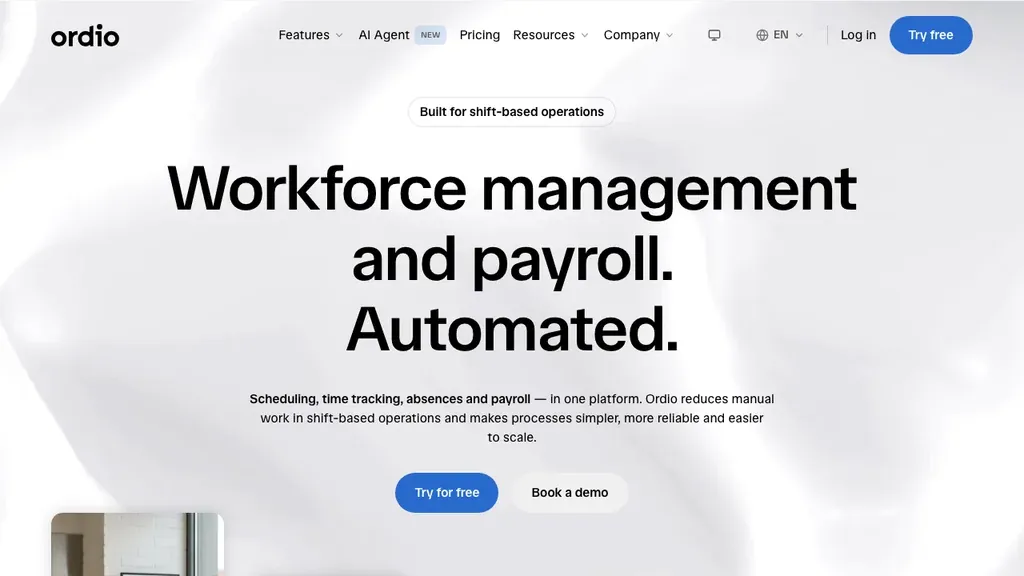
Best for: Multi-location hospitality, retail, and healthcare teams (often 10–200 shift workers per site) that need DACH/EU labour compliance depth and may expand into the UK or Ireland.
Who it's for: Operators replacing Excel rotas or split scheduling/time stacks; groups with EU sites that may add UK/Ireland locations.
Ordio unifies shift planning, time tracking, absence management, and payroll-ready data, so planners are not reconciling Excel against a separate clock-in app. Multi-site groups can standardise templates while keeping local swap approvals on the employee app.
Pros: Strong EU/DACH compliance narrative, location-based pricing, industry workflows, Nano AI for natural-language shift tasks. For how AI fits HR and operations together, not just WFM vendors, see our AI in HR guide. Cons: Not a US-native payroll engine like Homebase; not an enterprise union pay-rule engine like UKG.
Verdict: A strong pick when EU compliance and shift operations in one stack matter more than a US-only payroll bundle.
Try workforce management with scheduling and time in one place:
Deputy
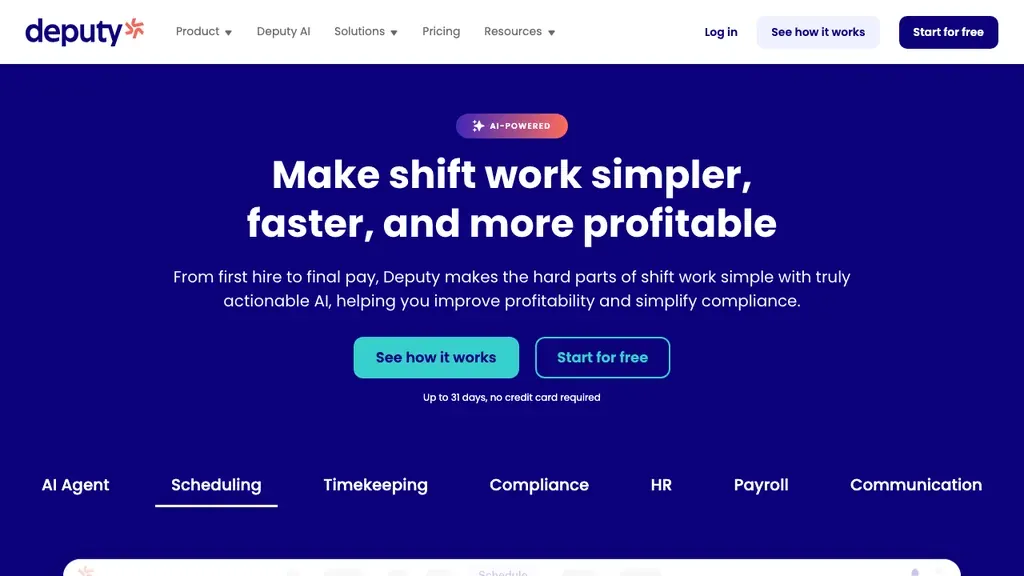
Best for: Teams that want demand-based auto-scheduling with regional compliance templates (popular in Australia, the US, and the UK).
Who it's for: Multi-site hospitality and retail groups that need auto-fill rotas and compliance templates without enterprise HCM overhead.
Pros: Mature scheduling automation, solid mobile apps, multi-location support. Cons: Per-user costs add up; less DACH-specific depth than Ordio for German labour rules.
Verdict: Shortlist Deputy if US/UK compliance templates and auto-fill rotas are your priority.
Deputy's demand signals and template libraries help multi-site retail and hospitality groups standardise rotas. If you operate in Germany or Austria, compare whether break and rest rules match your local documentation needs. US-first tools sometimes need manual policy overlays for EU sites.
Connecteam
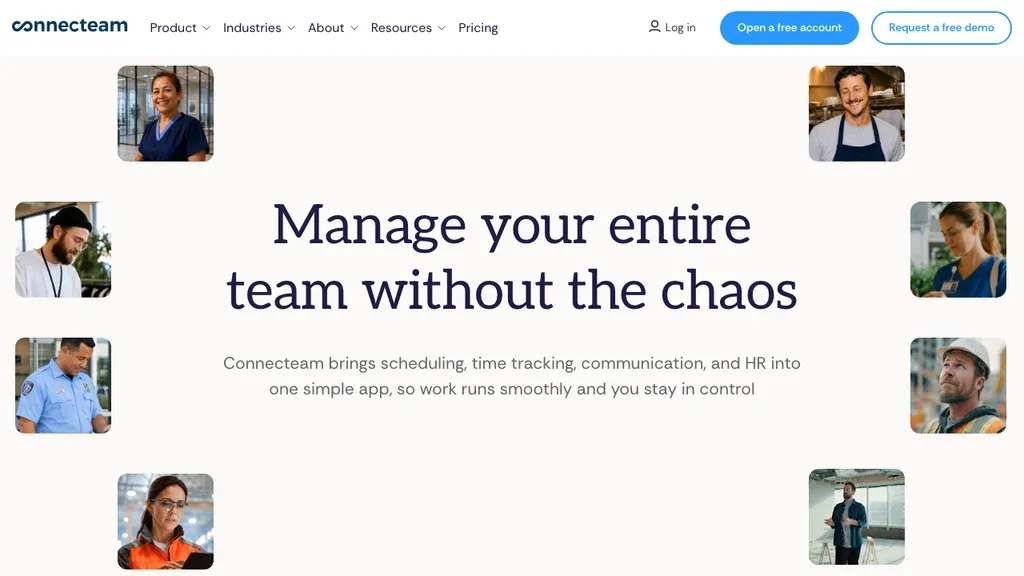
Best for: Deskless teams that want scheduling plus chat, forms, training, and checklists in one mobile hub.
Who it's for: Field teams, frontline supervisors, and small operators who already run daily ops through mobile checklists and want scheduling in the same app.
Pros: Generous free tier for small teams, strong frontline UX. Cons: Hub pricing can grow with modules; lighter on EU-specific workforce compliance depth.
Verdict: Connecteam fits operators who want an all-in-one deskless app, not a pure WFM specialist.
Teams that already coordinate via chat and checklists often adopt Connecteam quickly because scheduling sits beside daily ops tools. If your buyer question is strictly WFM compliance and payroll-grade time data, validate exports early, hub tools can be lighter on labour-law audit trails than dedicated WFM vendors.
Planday
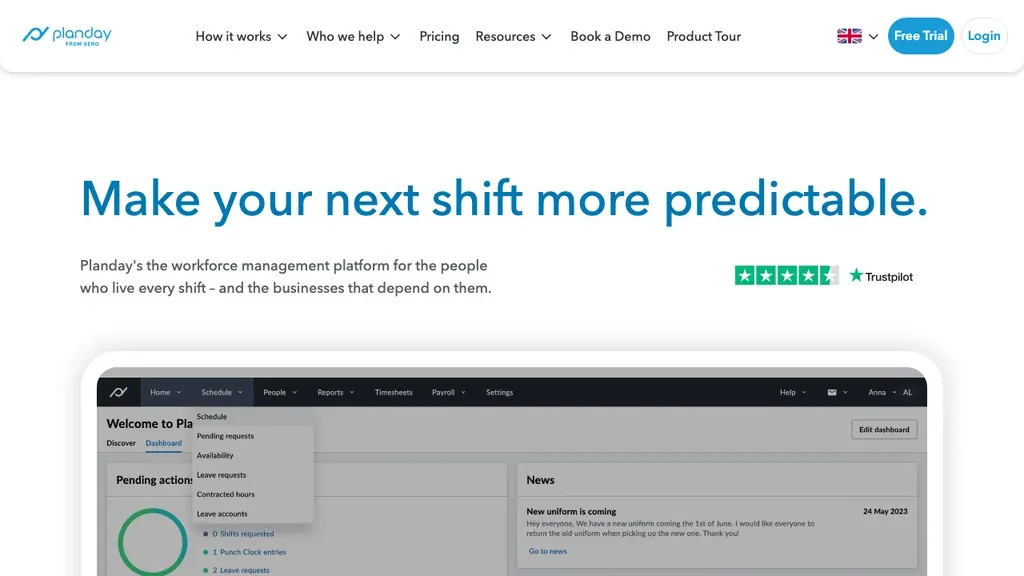
Best for: EU hospitality businesses tracking labour cost as a percentage of revenue (Xero ecosystem common in UK/Nordics).
Who it's for: Restaurant GMs and ops leads optimising wage percentage against sales, especially multi-site groups with seasonal revenue swings.
Pros: Labour % forecasting, established restaurant user base. Cons: Plus plans may include base fees; narrower outside hospitality-heavy use cases.
Verdict: Planday is a sensible pick for EU restaurants optimising wage percentage against sales.
Planday's labour-cost percentage view helps GMs explain staffing decisions to finance, especially when revenue swings seasonally. Pair it with your accounting stack (Xero is common in UK/Nordic hospitality) and confirm whether time capture meets your jurisdiction's record-keeping expectations.
When I Work
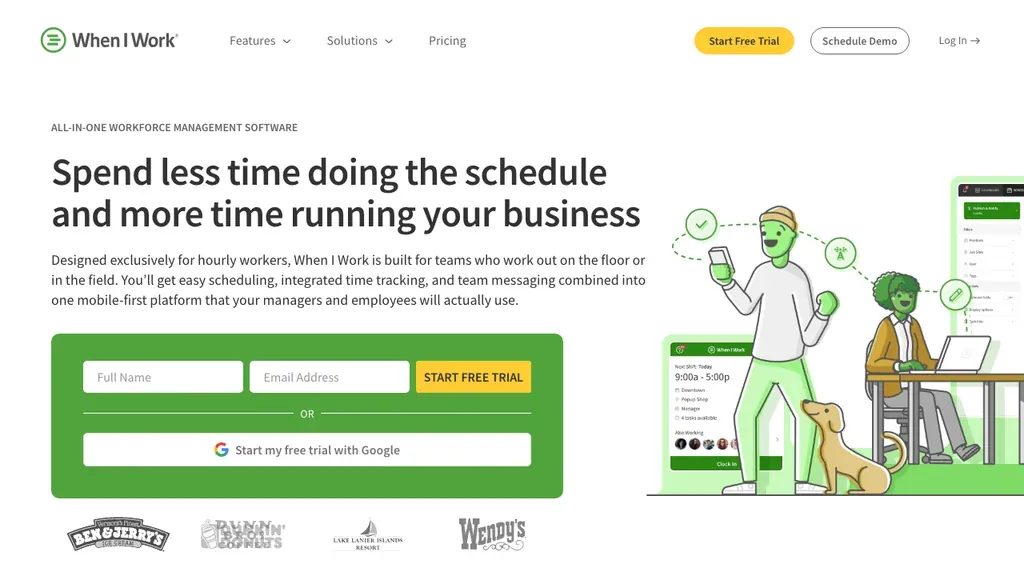
Best for: Small US/UK teams that need a simple, fast-to-roll-out schedule and clock-in app.
Who it's for: Single-site cafés, clinics, and front desks under ~25 staff that prioritise speed over deep workforce analytics.
Pros: Low entry price, intuitive mobile experience. Cons: Thinner absence, document, and compliance tooling vs full WFM suites.
Verdict: When I Work works when scheduling simplicity beats deep workforce analytics.
For a 15-person café or clinic front desk, When I Work's low-friction mobile app can be enough to retire WhatsApp rotas. Add a dedicated time product or upgrade tiers when you need break enforcement, document storage, or multi-location labour reporting, otherwise you may outgrow the basics within a year.
Shiftbase
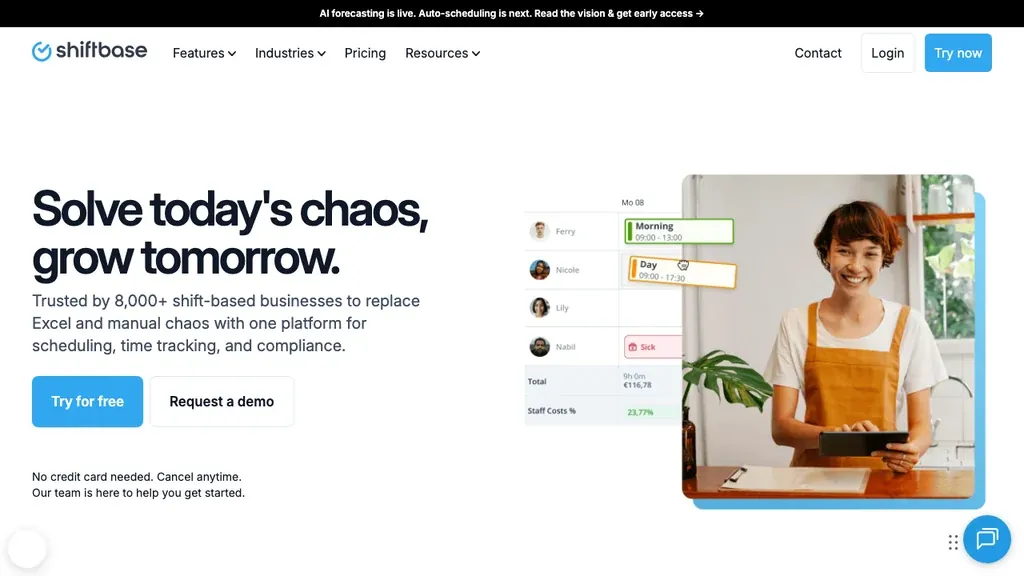
Best for: European hourly teams wanting unified scheduling, time tracking, and leave in one EU-friendly package.
Who it's for: Hourly operators in the Netherlands, Germany, or Nordics comparing EU-native alternatives to US schedulers.
Pros: Clear hourly-team positioning, competitive entry pricing. Cons: Less vertical depth for healthcare qualification matching.
Verdict: Shiftbase is a direct EU alternative to US-centric schedulers, compare alongside Ordio on compliance depth.
Shiftbase markets clearly to hourly European teams with scheduling, time, and leave in one package. Benchmark it against Ordio on industry templates, surcharge handling, and UK/Ireland rollout if you are expanding beyond the DACH core, pricing is competitive but feature depth varies by module.
Homebase
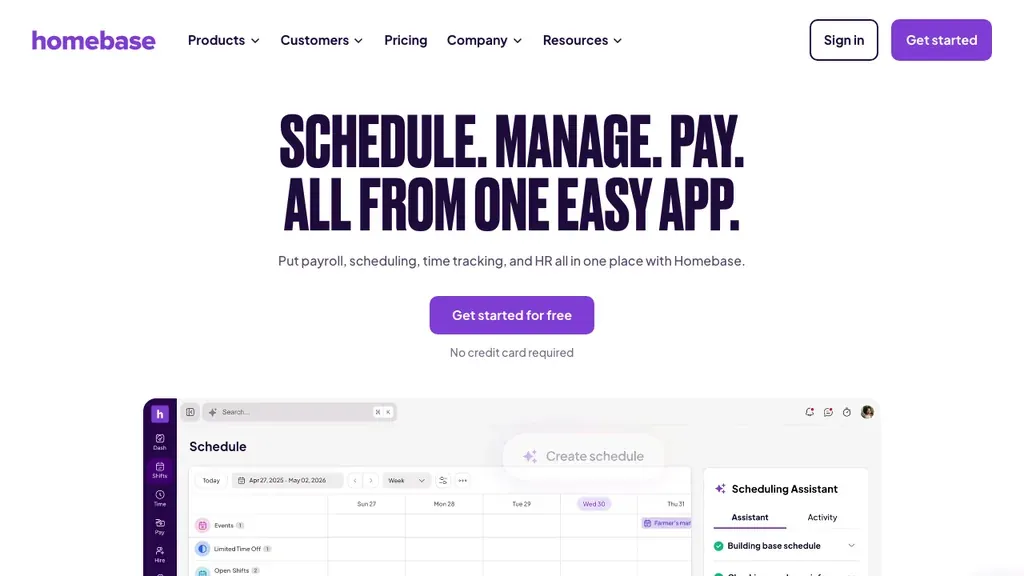
Best for: US restaurants and retailers that want a free starting tier plus tip pooling and US payroll pathways.
Who it's for: US hourly businesses starting with free scheduling and adding payroll as headcount grows, especially single-location workforce management software for restaurants and retail stores.
Pros: Free plan for basic scheduling/time; strong US hourly market fit. Cons: Limited relevance for DACH/EU-first compliance programmes.
Verdict: Homebase is the pragmatic US pick when payroll integration matters more than EU labour law depth.
US restaurants and retailers often start on Homebase's free scheduling tier, then add time tracking and payroll services as headcount grows. International groups should treat Homebase as a US hub, not the default for German ArbZG-style documentation or UK Working Time audit packs without additional configuration.
UKG / Workday (enterprise)
Best for: Large organisations (500+ employees) with complex HCM, union rules, and global analytics programmes.
Who it's for: Enterprise HR and operations teams procuring global HCM, not a 30-person restaurant or clinic buying their first rota app.
Pros: Deep workforce analytics, enterprise integrations, union and collective-agreement support at scale. Cons: Long implementations, six-figure annual programmes, and configuration overhead beyond SMB shift operations.
Verdict: Is Workday a WFM tool? Workday and UKG include WFM modules inside broader HCM, right for enterprise workforce planning, not typical café or clinic rollouts. If your RFP mentions contact-centre forecasting or global headcount models, you are probably in the wrong category for this guide.
Smaller groups sometimes inherit UKG or Workday through a parent company acquisition. In that case, negotiate whether site managers keep a lightweight shift tool for daily rotas while enterprise HCM handles payroll and headcount, forcing café managers into a full HCM scheduler rarely ends well.
Workforce management software vs HR software vs scheduling apps
Search results for best workforce management software mix three different categories. If a vendor page leads with call-volume forecasting or global HCM transformation, it may not fit a restaurant, store, or clinic floor, use our comparison table as a quick filter.
Buyers often confuse three categories:
- WFM software: Operational shifts, planning, time, absence, labour reporting
- HR software (HRIS) / employee management software: Employee records, recruiting, performance, sometimes payroll
- Scheduling apps: Rotas/calendars, may lack compliant time capture and audit trails
When to choose WFM: You need plan-to-payroll traceability, break rules, and multi-site labour visibility. When HRIS alone is enough: Desk-based teams with infrequent schedule changes and payroll handled elsewhere. When a scheduling app is enough: A single site under ~10 staff with minimal compliance documentation, until you add time capture or a second location. For a dedicated comparison of rota-only tools, see our employee scheduling software guide. If you need predictive people science on top of clean hours and absences, see HR analytics software, after operational data is trustworthy. Employee monitoring software (desktop activity or screenshots on laptops) is not WFM, if HQ asks for that after shift clocks are solid, use our employee monitoring software comparison separately with legal review.
Many businesses run WFM for daily shifts and HRIS for hiring, performance, and employee records. The common mistake is expecting HRIS to solve last-minute cover, or expecting WFM to replace a full talent suite. If crew cite unfair rotas in pulse surveys, fix scheduling first, then add employee engagement software for listening and recognition when hiring is stable. If you need planning, time, and payroll-ready hours together, see employee scheduling, time tracking, and payroll-ready exports in one stack.
The 4 pillars of workforce management (shift-based businesses)
What are the 4 pillars of WFM? For shift operations, use this practical framing (contact-center variants differ):
- Scheduling, build and adjust rotas against demand
- Time and attendance, capture actual hours, breaks, and overtime
- Absence and leave, holidays, sickness, availability, shift swaps
- Labour compliance and reporting, rules, audit trails, cost visibility
Tools that only cover pillar 1 leave you exporting hours manually, a common source of payroll errors and compliance gaps.
In practice: scheduling without time (pillar 1 only) creates payroll rework; time without absence (pillars 1–2) leaves managers in WhatsApp for cover; compliance reporting (pillar 4) is where auditors and finance ask questions, your WFM should connect all four without CSV bridges.
When you evaluate vendors, ask which pillars are native modules versus paid add-ons. A cheap scheduler that charges extra for compliant time capture often costs more than an integrated suite once you count manager hours and payroll corrections.
Key features for hospitality, retail, and healthcare
Vertical requirements differ more than generic feature lists suggest. Use the checklists below during demos, not just the marketing homepage.
Hospitality: Restaurants, bars, and hotels need rotas that survive last-minute call-outs and split shifts.
- Fast shift swaps and manager-approved cover without WhatsApp chaos
- Split-shift and peak-night coverage templates
- Tip or surcharge-aware time data tied to payroll exports
- Sunday-night call-out workflow tested in pilot week one, not just weekday lunch service
See Ordio for hospitality for industry-specific workflows.
Retail: Multi-store chains need central standards with local execution, especially for seasonal hiring and district-manager visibility.
- Central rota templates rolled out to many stores in the same week
- Inter-store swap rules and district-manager labour dashboards
- Seasonal hiring spikes without breaking hour-export consistency
- Multi-store retail scheduling: per-location hour exports payroll can reconcile, even when staff float between sites
See retail workforce management for store-floor patterns.
Healthcare: Care rosters must show qualifications on each shift, not just names on a grid.
- Qualification-aware rotas (nursing levels, care certificates, driver licences)
- Night and weekend coverage with rest-period warnings before payroll closes
- Ward- or clinic-level pilots before enterprise-wide rollout
See healthcare scheduling for care-team requirements.
How much does workforce management software cost?
SMB shift teams typically pay $50–$250/month for core scheduling and time, or $2–$8 per user/month on seat-based plans. A 30-person site on a $4/user plan is roughly $120/month before add-ons, but list price is only part of the story.
Plan tiers you will see in 2026 demos:
- Freemium / basic: scheduling-only or capped users (Homebase, Connecteam ≤10)
- Core WFM: scheduling + time + basic absence (Deputy, When I Work, Shiftbase mid-tier)
- Location-based: per-site pricing when headcount per venue is high (Ordio)
- Enterprise: custom modules, SSO, and global analytics (UKG, Workday)
Illustrative monthly totals for a 30-person shift team (July 2026, verify with vendors):
- Seat-based: 30 × $4/user ≈ $120/month before add-ons (Deputy, When I Work mid-tier)
- Location-based: €89/site (Ordio), attractive when one venue employs many part-time staff
- Freemium hub: Connecteam free ≤10 users; paid hub from ~$29/month plus per-user scaling
- Enterprise: UKG/Workday custom, often six-figure annual programmes, not SMB maths
Location-based pricing (e.g. Ordio per site) can be cheaper when many part-time staff share one venue. Hidden costs: onboarding, integrations, manager time during rollout, and per-module upsells on hub tools like Connecteam. Compare totals on Ordio pricing and run a two-week pilot before annual contracts, especially for workforce management software for small business teams that may outgrow freemium caps within one busy season.
Free vs paid workforce management software
Is there free workforce management software? Yes. Connecteam (up to 10 users) and Homebase (basic scheduling/time) offer free entry tiers. Freemium works for trials and very small teams, but shift operators with compliance obligations usually outgrow limits on exports, break enforcement, and multi-site reporting.
Use free plans to test mobile adoption, then budget a paid tier before peak season or an audit cycle. Hidden limits to check: maximum users, payroll export formats, manager seats, and how long time records are retained.
Tip: A free rota app plus a separate spreadsheet for hours is not workforce management, it is the manual process you are trying to replace.
How to choose the right workforce management software in 5 steps
Feature checklists fail when the buying team skips operational proof. Work through these five steps in order, each builds on the last.
- Define the job, scheduling only vs scheduling + compliant time + absence. Write down which pillars from our framework you need on day one versus year two.
- Map compliance market. US FLSA, UK Working Time Regulations, or DACH/EU labour rules. A US-first tool may work in London with templates; German ArbZG-style documentation often needs EU-native depth.
- Shortlist two tools, run parallel pilots with real rotas and call-outs. Use the comparison table to match region, vertical, and pricing model (per seat vs per site).
- Check integrations, payroll, POS labour data, HRIS employee IDs, and accounting exports you already use. Ask vendors for a sample export before you sign.
- Measure adoption, if frontline staff will not clock in on the app, the best feature list fails. Track crew login rates in week one, not just manager satisfaction.
During the pilot, track three operational metrics: minutes to publish a revised rota after a call-out, percentage of hours captured in-app versus manual edits, and manager hours spent chasing availability. If any metric fails in week two, switch candidates, do not wait for annual renewal.
Involve a shift lead and one crew member in scoring, not only HR or IT. Their friction signals predict rollout success better than a leadership demo.
When Ordio is, and is not, the right fit
Ordio is a strong fit for many EU shift operations, but not every team reading this guide should default to it. Use the lists below to stay honest and avoid expensive category mistakes.
Ordio fits well when:
- You run shift-based sites in hospitality, retail, or healthcare
- You need EU/DACH labour compliance depth and may expand into the UK or Ireland
- You want scheduling, time, and absence in one stack, not Excel plus a clock-in app
- You value location-based pricing when many part-time staff share one venue
Ordio is not the best fit when:
- You need US-native payroll and tip pooling like Homebase on day one
- You are procuring global enterprise HCM (UKG, Workday, SAP)
- You only need a free solo rota for under five staff with no audit trail
- Your buying process mandates contact-centre WFM or union pay-rule engines
That honesty keeps your shortlist credible. Compare Deputy, Shiftbase, or Planday against Ordio on the same week of real shifts before you decide.
Common mistakes when choosing workforce management software
Most failed rollouts are category or adoption mistakes, not missing a checkbox on a feature matrix. Avoid these five patterns we see in shift operations:
- Buying enterprise WFM as an SMB, paying for contact-centre or union pay-rule engines you never configure
- Scheduling without time capture, rotas that do not produce audit-ready hours for payroll
- Ignoring mobile adoption, managers love the dashboard; crews ignore a clunky app
- Skipping a real pilot, demo data hides pain on holiday cover and last-minute swaps
- US listicles for EU operations. FLSA-first tools may miss German or UK rest-period rules you must document
Run a two-week pilot with one busy site before you sign an annual contract. Time how long it takes to republish a rota after an unplanned absence, that single metric predicts year-one success better than a feature checklist. If two tools pass the pilot, compare total cost (seats, sites, integrations, and manager time) before you pick the better-known brand.
Moving from spreadsheets to workforce management software
Teams that outgrow Excel usually follow the same path. Skipping a step, especially parallel running, is why many “go-live” weekends fail.
- Import baseline data, staff, roles, sites, and recurring shift patterns. Clean duplicates before import; bad master data poisons every rota.
- Configure rules, breaks, rest periods, and overtime thresholds for your jurisdiction. Match how payroll expects hours, not how the old sheet rounded them.
- Run parallel for two to four weeks, publish the official rota in WFM while keeping the spreadsheet read-only for comparison. Reconcile hour differences weekly.
- Train shift leads on swaps, approvals happen in the app, not WhatsApp. One champion per site reduces support load.
- Archive the spreadsheet, dual planning erodes trust. Keep the old file read-only for audit history only.
If you are still comparing options, use the table above to pick two vendors and test the same week of real shifts in both systems. The migration path is similar, the difference is whether the tool survives Sunday night.
US and UK compliance basics (what your WFM should support)
United States: Under the FLSA, employers need reliable records of hours worked to support FLSA overtime calculations and overtime pay on paychecks. Your WFM should capture start, end, and break duration, not rounded “8 hour” guesses.
United Kingdom / Ireland: Working Time Regulations require adequate rest and record-keeping for many workers. Multi-store UK retail and Irish hospitality groups often shortlist Deputy, Planday, or Ordio when they need EU-friendly audit trails alongside UK rotas.
EU / DACH buyers: Even when US vendors support UK templates, confirm rest periods, break documentation, and export formats match how your payroll provider expects hours, especially for cross-border groups.
Before demos, list must-have integrations: payroll exports, POS labour data, and HRIS employee IDs. A tool that wins on scheduling but cannot push hours to payroll recreates the spreadsheet problem you are trying to leave behind.
This article is operational guidance, not legal advice, validate rules with counsel for your sector and region.
Related guides for shift-based teams
Deeper Ordio resources: shift planning, time tracking, absence management, payroll-ready exports, employee files, and pricing. Industry guides: hospitality, retail, and healthcare.
When “qualified to work” is the gap after rotas are stable, see our competency management software guide. For hire-to-retain workflows, see talent management software. For Slack/Teams-style desk stacks (not WFM suites), see work from home apps.
Building a shortlist? Start with the comparison table and honesty block, then pilot the same week of shifts in two tools. Small teams should follow the same discipline: map your compliance market, test mobile adoption early, and plan for payroll exports before peak season.
Conclusion: pick the right workforce management software for your team
There is no universal winner. The right workforce management software for shift-based teams depends on region, vertical, team size, and whether you need EU compliance depth or US payroll-native workflows, not a one-size affiliate ranking.
Shortlist two tools from the table, run a two-week pilot with real call-outs, and favour integrated scheduling and time over point solutions. For DACH/EU operations with UK expansion on the roadmap, Ordio is a practical starting point, with Deputy, Shiftbase, or Planday as regional alternatives worth testing on the same rota week.
When you are ready, start a trial or book a no-obligation demo, then validate payroll exports before you switch off spreadsheets.
Frequently asked questions about Workforce Management Software
What is workforce management software?
Workforce management software (WFM) plans shifts, captures worked time, manages absences, and supports labour compliance for deskless teams. Unlike enterprise HCM suites, shift-based WFM focuses on daily rotas, mobile clock-ins, and audit-ready hours, especially in hospitality, retail, and healthcare.
What are the 4 pillars of workforce management?
For shift-based teams, the four pillars are scheduling, time and attendance, absence and leave, and labour compliance and reporting. Strong WFM connects all four so planned rotas match paid hours, without spreadsheet exports between apps.
What is the best workforce management software?
There is no single best tool for every team in 2026. For EU/DACH shift operations with UK expansion, Ordio is a strong starting point. US-heavy groups often shortlist Deputy or Homebase; EU hospitality may prefer Planday. Compare two tools with a two-week pilot on real rotas, not demo data alone.
How much does workforce management software cost?
SMB shift teams typically pay $50–$250/month or $2–$8 per user/month. A 30-person team at $4/user is roughly $120/month before add-ons. Location pricing (e.g. Ordio per site) can beat per-seat maths for busy venues. Confirm totals on vendor sites, figures in our table are July 2026 starting points.
Is there free workforce management software?
Yes, limited free tiers exist (Connecteam ≤10 users, Homebase basic scheduling). Free plans often cap exports, compliance checks, and multi-site control. Use freemium to trial mobile UX, but budget a paid tier if you need audit-ready time data and payroll exports for a regulated shift operation.
What is the difference between workforce management software and HR software?
HR software (HRIS) manages employee records, recruiting, and often payroll administration. WFM software runs daily shift operations: rotas, clock-ins, absence, and labour reporting. Many businesses use both. WFM for the floor, HRIS for people administration. See our HR software comparison and time tracking for Ordio modules.
Is Workday a workforce management software?
Workday and UKG include workforce management modules inside broader HCM platforms, scheduling, time, and labour analytics at enterprise scale. They suit large organisations with complex pay rules; most 10–200 person shift sites use lighter tools from our comparison table instead.
What workforce management software works for multi-store retail?
Multi-store retail needs central templates, local manager autonomy, and clean hour exports per location. Ordio, Deputy, Planday, and Shiftbase support multi-site models, compare seasonal hiring, inter-store swaps, and labour-cost reporting. Pilot one busy retail store first, then roll out chain-wide.
Deputy vs When I Work, which is better for UK teams?
Deputy is stronger when you want compliance templates, demand-based scheduling, and multi-site control across the UK, US, and Australia. When I Work wins on simplicity and entry price for small teams that mainly need rotas and clock-ins. Run the same week of shifts through both apps before you decide.
Does workforce management software help with UK Working Time Regulations?
Good WFM tools record working hours, breaks, and rest patterns, the operational data you need to support compliance with UK Working Time Regulations. Features vary: Deputy and Planday market UK-friendly workflows; EU-focused tools like Ordio emphasise cross-border labour rules. This is operational guidance, not legal advice, confirm requirements with counsel.