Hospitality
Hospitality shift planning Duty rosters and time tracking in one place
HR software that takes pressure off your floor team, shifts, hours, and communication in one place.


















The first workforce planningsoftware, built for hospitality teams
Less chaos on every shift
No chaotic WhatsApp groups, no endless schedule changes, and fewer misunderstandings.
More time for what matters
Your venue, your guests, your team, not another hour on spreadsheets.
Secure and documented
Hours, breaks, and changes are recorded clearly, fewer surprises at payroll time.
Built in hospitality, for hospitality
Ordio was not born in a boardroom, it was shaped in real restaurant operations.
Founder David Keuenhof managed rotas, sick notes, and payroll for 125 staff across three Sushi Ninja sites in Cologne, every single day.
He built Ordio to match how hospitality actually runs: fast changes, tight margins, and teams on their feet.

Shift planning without the headache
Save hours each week and cut scheduling mistakes. Ordio builds rotas using shift requests, availability, and assignments, with AI support where it helps. You spend less time on planning and fewer errors slip through on busy weekends.
Compliant time tracking made simple
No wrong times, no manual fixes. Staff clock in and out in the Ordio app or on a terminal on site. Breaks, premiums, and actual hours are captured automatically, minute by minute and ready for payroll prep.
Gross pay from shifts & time tracking. net optional
Ordio calculates gross pay from pay rules, shift plans and time tracking, ready for DACH payroll export (DATEV) to your tax advisor. Optionally book Payroll Plus for fully integrated net payroll including taxes, social insurance, filings and payslips (€15 per payroll run per employee).
HR admin in one view
All information, contracts, master data, and documents sit centrally, structured and easy to browse. Managers and staff find what they need without folders, notes, or inbox chaos.
Everything your team needs in one place
From kitchen to floor: planning, hours, reporting, and checklists on one platform, even for small venues.
Reporting and analytics
Get detailed insight into labour cost, hours, and productivity. Dashboards and reports keep you in control of your team and support data-led decisions, not guesswork on busy service nights.





Absence management
Manage holiday, sick leave, and other absences centrally and clearly. Staff request time off in the app, and you always see who is available and how much leave is left, without chasing updates in chat.

Nano, your AI agent
Who can cover tonight? Nano finds replacements, updates the team, and keeps your rota current, in chat, without planning chaos.
Tasks and checklists
Streamline daily operations with checklists and interactive task management, clear ownership from open to close.
Real success stories
See how other businesses use Ordio in practice
In our spotlight videos, hospitality, retail and service teams share how they optimize employee scheduling and shift planning, capture time and organize people with Ordio: first-hand stories from teams who use it every day.

“With Ordio we see all working hours at a glance, qualifications, perfect shift coverage, one tool for everything. That saves time and money.”
Marco Cohrt
Managing director

“With Ordio we manage studio staff nationwide efficiently and scale new locations much more easily.”
Maria Graffelder
YTTP

“We use Ordio at LANXESS arena for our entire workforce organisation.”
Stefan Löcher
Managing director, ARENA Management GmbH

“It's an absolute relief for our practice day-to-day. No more paperwork or Excel chaos.”
Dr. Verena-Vanessa Lehmann
Zahnarztpraxis Lehmann Lötzerich
“Ordio saves us 40% of the time we used to spend on workforce admin each week.”
Fabian
HR & procurement lead
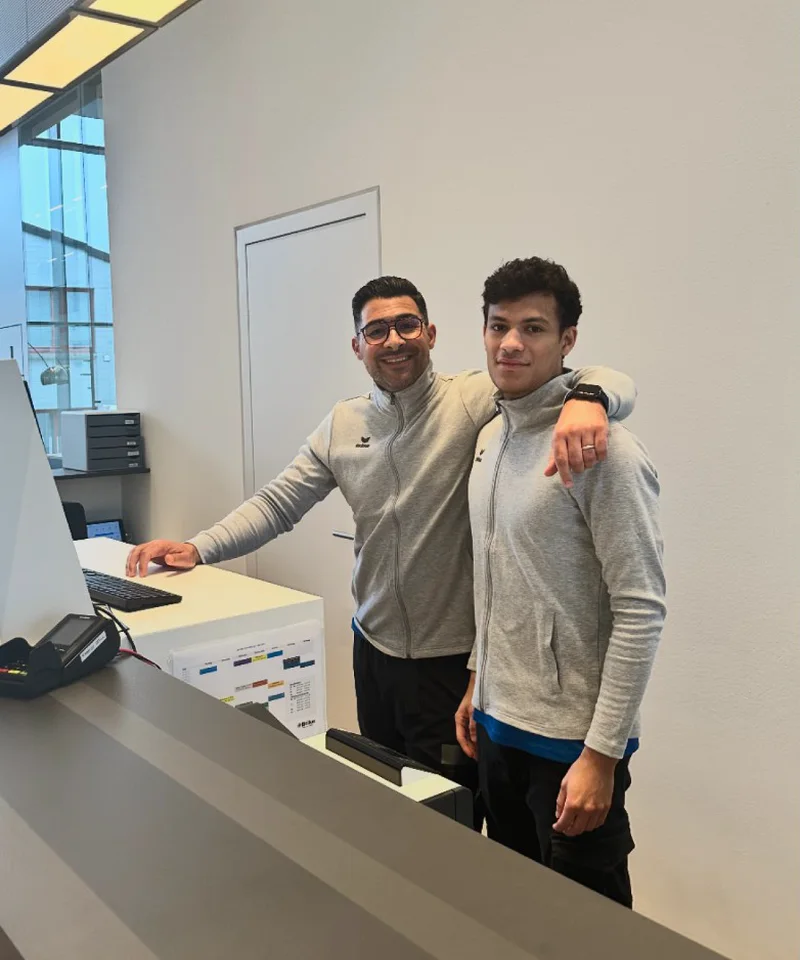
“Ordio makes shift planning easier for our diverse team of therapists and trainers, so we can focus on patient care.”
Bilal Al-Sarray
Praxis Bilal

“Ordio gives us efficient shift planning and better team communication, clear and easy to customise.”
Jenifer Patrix
Operations manager

“With Ordio I opened a second shop without losing oversight.”
Maren Ernst
ERNST Kaffeeröster

“Ordio makes our day-to-day easier, the team organises itself and admin work is much lighter.”
Meike Mirbach
Studio manager

“Ordio saves us hours of planning every week. That leaves more time for the craft.”
Grischa Herbig & Caspar Krings
Feinripp & Gold
“With Ordio we finally have software that meets the specific needs of our diverse services.”
Jörg Fischer
Head of social care
Connect your integrations



Frequently asked questions about hospitality scheduling
What does Ordio do for the hospitality industry - and for whom is it worthwhile?
Ordio bundles shift planning, time tracking and team organization for businesses such as restaurants, cafés, bars, hotels or catering: you plan shifts, view availabilities and record times - instead of juggling everything with paperwork and individual tools. Whether you have a small team or several locations: If you manage staff in shifts, Ordio provides you with a common platform for planned and actual times.
How does shift planning and rostering with Ordio work in everyday restaurant life?
You create shifts and roles - such as service, kitchen or bar - and assign them in the shift plan. Employees can see their shifts in the Ordio app and you can identify gaps and overlaps early on. Changes can be entered centrally so that less coordination is required than with printed schedules. This keeps the focus on guests and the schedule, not on Excel chaos.
Is Excel or paper enough - or when is duty roster software worthwhile for the hospitality industry?
Tables and slips of paper work in the short term, but scale poorly: as soon as multiple roles, exchanges and last-minute changes are added, the schedule quickly becomes confusing. A roster software like Ordio centralizes availabilities, shift templates and communication - in the restaurant, café or catering. You coordinate less and remain transparent; this is particularly beneficial for growing teams or multiple areas.
Do working hours have to be recorded in the hospitality industry - and how does Ordio help?
In Ordio's core DACH markets (Germany, Austria, Switzerland), employers must record their employees' working hours systematically and comprehensibly; the exact requirements for form and proof are evolving with legislation and case law. With Ordio, you can record the start, end and breaks digitally and make them available for evaluations and payroll preparation. More in-depth information (based on German rules): Guide: time tracking in hospitality (German article).
How do employees record times - via app, terminal or shared device?
Depending on the company, something different is suitable: many teams use the employee app on their own smartphone, others use a shared area on a tablet or a terminal on site. Ordio supports digital recording so that the start, end and breaks are clearly documented and you can use evaluations for payroll. If in doubt, you can clarify which variant is legally and organizationally suitable with your tax advisor or HR department.
What advantages does Ordio offer during peak times, seasons and changing teams?
At peak times and seasonal peaks, quick transparency counts: who is scheduled, who is absent, where is someone missing? Ordio supports you with clear planning and time tracking so that you can see bottlenecks early on and not just during service. Changing staffing - temporary staff, different qualifications - can be mapped via roles and availabilities without every change requiring a new broadcast call.
How do you organize personnel planning across multiple locations or branches?
Ordio scales from a single business to organizations with multiple locations: You can map structures per location and still use central rules for shifts and times. This is crucial for chain stores and growing groups so that planning is not reinvented at every bar. Specific set-up and packages are best clarified in a personal meeting - .
How does Ordio support you with wages, tips and payroll preparation?
When times and shifts are properly recorded, evaluations can be prepared for payroll accounting - without duplicate lists. Ordio focuses on workforce planning and times; the ecosystem offers suitable modules for wages, payroll and interfaces to accounting - see Payroll. Tip and special rules are company-specific: agree rules with your accounting department and use the data from Ordio as a basis.
Is Ordio GDPR compliant and where is data processed?
Ordio is designed for use in the EU and relies on data protection-compliant processes: Hosting in Germany, clear roles in order processing and built-in rights for data subjects. Technical and organizational measures protect your team's personnel data - a must as soon as you manage times, absences and master data digitally. You will receive details on contracts and settings during onboarding with the team
How complex is it to set up Ordio in the hospitality industry?
You start with the basics: locations, roles, employees and initial shift templates. Many companies quickly have a usable plan because the interface is tailored to shift operations - without lengthy IT projects. Support and resources accompany the introduction so that the kitchen and service do not have to maintain two systems in parallel for weeks. This noticeably reduces the amount of paperwork or scattered spreadsheets.
Can part-time staff, temporary workers, and flexible schedules be mapped with Ordio?
Yes. Typical restaurant staffing, part-time roles, temporary workers, and changing hours, can be mapped via master data, shifts, and time tracking so that hours worked and planning match. Employees use the app or a shared device on site, depending on what suits the company. That keeps a clear record of who worked when, important for fair planning and clean payroll data.
What is the difference between industry software for the hospitality industry and generic HR software?
Generic HR tools often cover master data and processes "across the company" - but shift operations often lack fine shift logic, quick rescheduling and mobile use during ongoing operations. Ordio is designed for shift planning, real-time coordination and documented times in day-to-day hospitality operations. This keeps plan and actual times close together - instead of planning in one tool and times elsewhere
How much does Ordio cost - and how do you find out which package suits your company?
Prices depend on the scope and package - you can find a reliable overview with current conditions on the price page. For the hospitality industry, team size, locations and which modules you need (e.g. planning, times, payroll connection) are often decisive. If you're unsure what's right for you, a brief discussion will help: - without hidden obligations in the body text.
Can Ordio and other systems (e.g. cash register or accounting) be meaningfully interlinked?
Many companies combine HR planning with cash register, POS or accounting. Which interfaces and integrations are available for your setup depends on the package and partner solutions - the team can tell you the right options during onboarding. Important: Ordio remains the layer for scheduling and times; financial and POS systems supplement the workflow where it makes technical sense.
Where can you find more detailed information on time recording obligations and labor law in the hospitality industry?
For basics and updates on time tracking and operations, the guide time tracking in hospitality (German article) in the Ordio Insights section is well worth a read. Legal issues are individual: use our content as a guide and seek legal or tax advice if necessary. This will keep you informed without generalizing answers that only apply to your business.
Get started for free & discover Ordio for hospitality
Create your free Ordio account in minutes, no payment details and no contract. Explore scheduling, time tracking, and team workflows directly in the product.
Questions or prefer to start together? Our team helps with setup and rollout, optionally as a personal walkthrough.